Pioneer Valley deliveries run on the same trucks as our city work, so freight stays sensible.
Around Marian it's mostly acreage storage, farm gear, and workshop space without a shed build. Whatever the job, the process doesn't change: one call, one delivered price with the freight in it, and the right truck matched to your access.
| Container | Used from | New from |
|---|---|---|
| 10ft Containers | $4,350 | $6,400 |
| 20ft Containers | $2,200 | $3,300 |
| 40ft Containers | $2,600 | $5,500 |
Guide pricing only — what you pay delivered depends on where you are and what's in the yard that week. Ring (07) 4944 2211 and we'll give you a real number, not a range. Freight to Marian is quoted with the container, so the number you're given is the number you pay.
Marian grew up around its sugar mill, and cane still sets the rhythm of the place. The town has been growing, with acreage and rural-residential lots spreading out along the valley. That gives Marian two quite different kinds of container buyer: growers who need farm storage, and newer residents on a few acres who want a lockup or a workshop without building a shed first.
On the farms, containers take the parts, tools, chemicals and small machinery that don't need to sit in the main shed. On acreage blocks they usually start as storage while the house goes up, then stay on as the mower shed, the workshop or the place where the boat gear lives.
Mill and harvest contractors are the third group. During the crush they want lockable storage close to where the work is, and a container on a mate's farm or on the contractor's own block is a common set-up.
Marian sits on the Pioneer River floodplain, and that's the thing to plan around. Much of the flat ground around town is prime cane land precisely because it's alluvial and well watered, and the same soil gets soft and heavy after a big wet. Low-lying paddocks can go under when the river comes up. The home page talks about how high to block a container off the ground on a Marian floodplain for a reason.
When you choose a spot, pick the highest practical ground on the property, not just the most convenient corner near the shed. Set the container on solid supports under the four corners. A cargo-worthy container keeps rain out from above, but floodwater gets in past the door seals and an empty container can float. If your block has gone under before, height is what protects what's inside.
Access in the dry is usually easy: flat ground, wide farm gates and good turning room. The problems are soft headlands, culverts that weren't built for a loaded truck, and cane that's grown tall right up to the track. In the wet we confirm the day against ground conditions, because a bogged truck helps nobody.
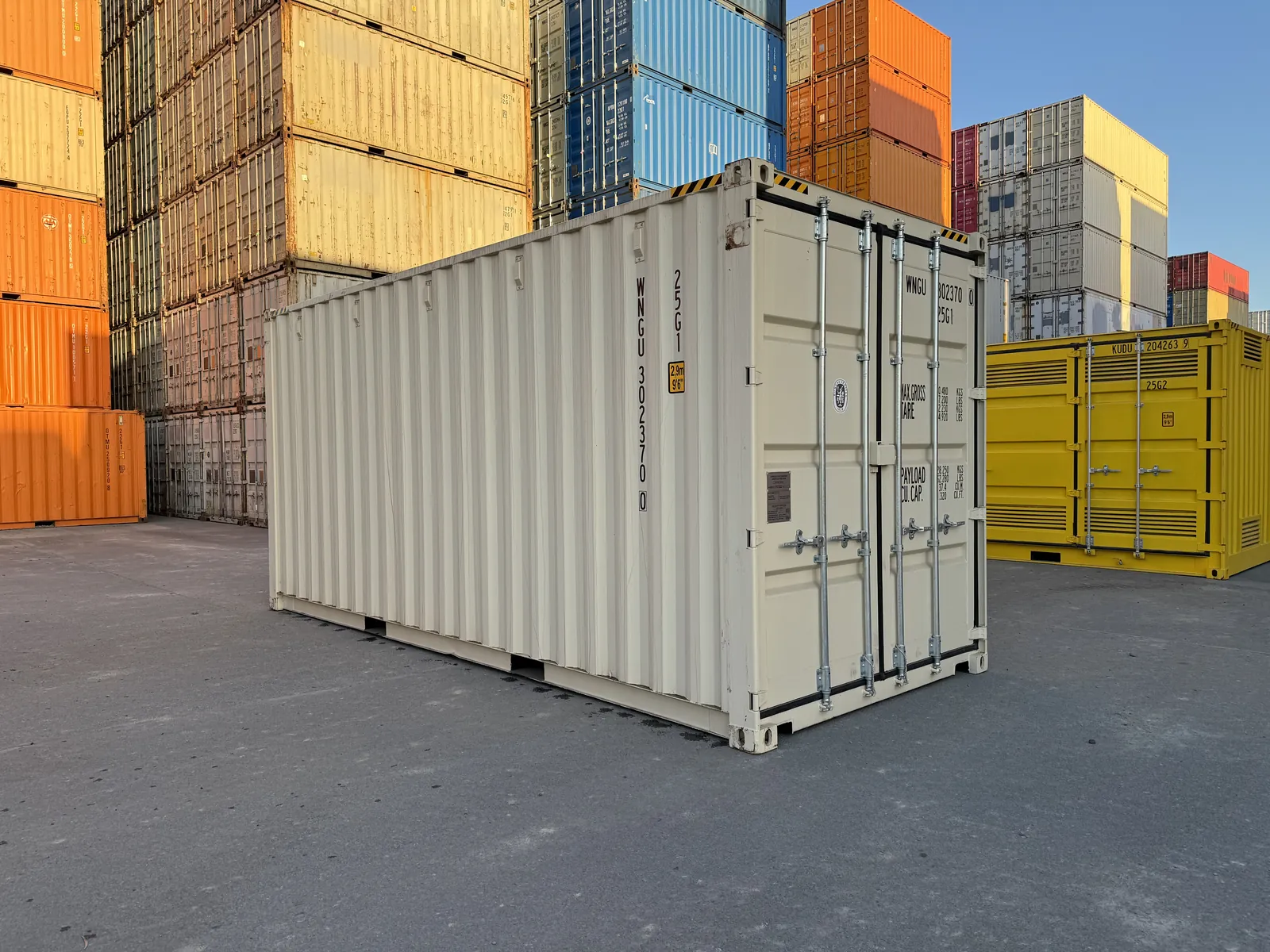
Growers usually choose a 40ft for implements and machinery if the farm has room for a sidelifter, which most do. Acreage owners usually find a 20ft is the right balance: big enough for a ride-on mower, tools and household overflow, and delivered on a tilt-tray, which suits a driveway.
A popular valley set-up is two 20fts placed a few metres apart with a roof across the gap. It gives two lockable stores and a covered work area between them, and it can be added to later. Chemicals belong in a dangerous goods unit, not on a shelf next to the fuel. There's more in container storage on a cane farm.
Farm storage tends to be permanent, so Marian growers mostly buy. A cargo-worthy used container, wind and watertight, sited properly and painted when it needs it, will outlast most sheds. As-is units are cheaper, but they're sold as seen and not sold watertight, so they're only suitable for gear that can cope with some moisture.
Owner-builders on new acreage often hire for the length of the build and then decide whether to keep the container. Hire units are cargo-worthy grade, wind and watertight, and if you decide to keep it we can talk about a buy-out rather than swapping units. The sales and hire page sets out how the numbers compare.
Marian deliveries go up the valley road from Mackay on our regular truck runs. Freight is quoted with the container based on your address and access, so you get one delivered price. The day is confirmed at order and depends on stock, the truck schedule and, in the wet, whether the ground at your drop spot is firm enough.
If you're on a farm, drop a map pin or describe the gate, because valley properties often have several entrances off different roads. If you're on acreage, a photo of the driveway and the drop spot is enough for us to confirm the truck.
On the highest practical ground, raised on solid supports under the corners. A cargo-worthy container keeps rain out from above but floodwater gets in past the door seals, so height is the only real protection for what's stored inside.
Yes. Hire suits the length of a build, and if you decide to keep the container afterwards we can discuss a buy-out.
Many growers use a 40ft for machinery, or two 20fts with a roof across the gap to make a covered work area between two lockable stores.
Usually in dry conditions. Soft ground after rain and culverts not built for heavy loads are the main risks, so we confirm access and the day at order.
Pleystowe, Balnagowan, Hampden, Mirani, Walkerston, Kinchant Dam. Same process, same delivered price structure: tell us the address and we'll work out the truck.
Size, grade, freight and timing sorted in a single conversation.